SEPTEMBER 2026
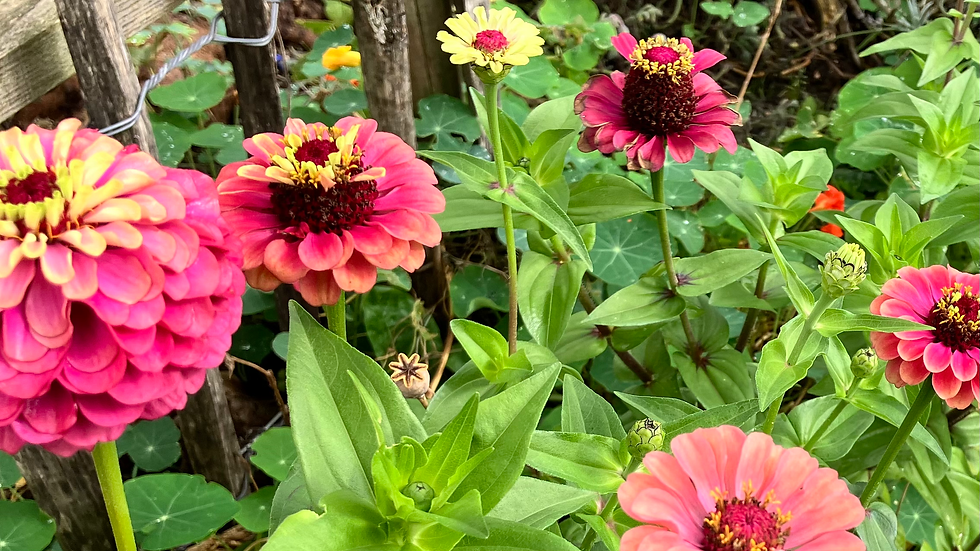
After a busy summer of keeping the plants in the garden growing, pruning back where needed, and removing anything unwanted whilst battling the heat September always tends to bring something of a respite and breathing space.
It’s a good chance to enjoy the garden with the oppressive temperatures gone but many summer favourites happily in flower. The dahlias and salvias are good ‘go-tos’ that readily produce many flowers through summer and long into autumn, but I have also been impressed by the zinnias this year.

Zinnias are native to the area of Mexico, the southern United States and parts of South America and so it is perhaps no surprise thatthey have enjoyed the summer. If growing them it is usually best to sow them in-situ as they dislike root disturbance, and dead-head them to keep them flowering, at the end of the summer they should be at the peak of their display.
As many of you will know September is often the month where thoughts turn to next year’s planting, and to begin setting out plans and pieces so that hopefully come next year the garden can effectively roll into being.

This starts with collecting seeds and cutting material. Some seeds will be packaged and stored for sowing next spring, but plenty of the hardier seeds can be sown now and then overwintered to be planted out next year as much larger plants. For us, some of the key plants for sowing now are delphiniums and gaura, but Dianthus carthusinorum is also a useful heat tolerant and hardy plant.
We generally take a good number of cuttings from different plants for two main reasons: partly to bulk up numbers of particular plants such as shrubs, but also to ensure we have stocks of plants such as sage, rosemary and some salvias just in case the winter cold kills off those in the garden.
Also to be considered at this time of year are any major changes needed because a garden isn’t the same from year to year; some plants become too large, some deteriorate, climate changes, the removal/addition of one tree can drastically alter the microclimate of the surrounding space and soil. Each year brings with it therefore a need to step back, re-evaluate and determine what adaptations need to be made.

This year we have two areas for redeveloping: the Hydrangea Bed and the Tennis Court Border.
Both areas are very dry, and have little shade to alleviate the temperatures through the summer. The plants survive these conditions as they wait it out for the rains, with some help from us, but it leaves these two areas looking fairly haggard through the summer. Therefore with this in mind the Hydrangeas will be moved to a shadier and slightly damper spot in the autumn. Carrying out this work in autumn enables the plants to set down roots for several months before the dryness of the summer.
For the Tennis Court Border we will retain plants if they fit the redeveloped scheme, but this area offers an opportunity to experiment with plants that can cope with an exposed situation, dry soil, with no additional watering, and that must also survive a cold winter with at times strong northern winds.
Plenty of work awaits in the autumn, but it should make for an interesting project, and two areas of the garden functioning far better into the future. Hopefully the plants will be happier for it too!


Comments