JUNE 2026

This month I want to explain a little about how we put together a planting display. Now is the time of year when it feels everything is growing at its best and everything is out in flower. It’s sunny and the plants still have enough ground reserves of water left over from the winter.

To help preserve that moisture we plant different species closely together. One might imagine that this would bring about competition but in actual fact plants tend to grow better when they have plenty of others around them, there is a definite strength in unity. Many plants together help to prevent water loss from the soil, and help to maintain humidity around the leaves preventing water loss from the plant. A community of plants will often share nutritional resources between them and some have the ability to warn others of approaching danger, usually through chemical signalling, giving all a better chance of survival.
We generally mix many different types of plants together, so shrubs, perennials, annuals, climbers and occasionally trees are all intermingled; some provide physical support, others might shade the soil giving a more stable microclimate.
We are also able to use the attributes of each group to create an interesting display; in general for example, many shrubs have a height and presence that can be useful as the ‘bones’ of a display; they often have good foliage to provide texture, and though not always the longest to flower they will tend to have masses of smaller and sometimes scented flowers.
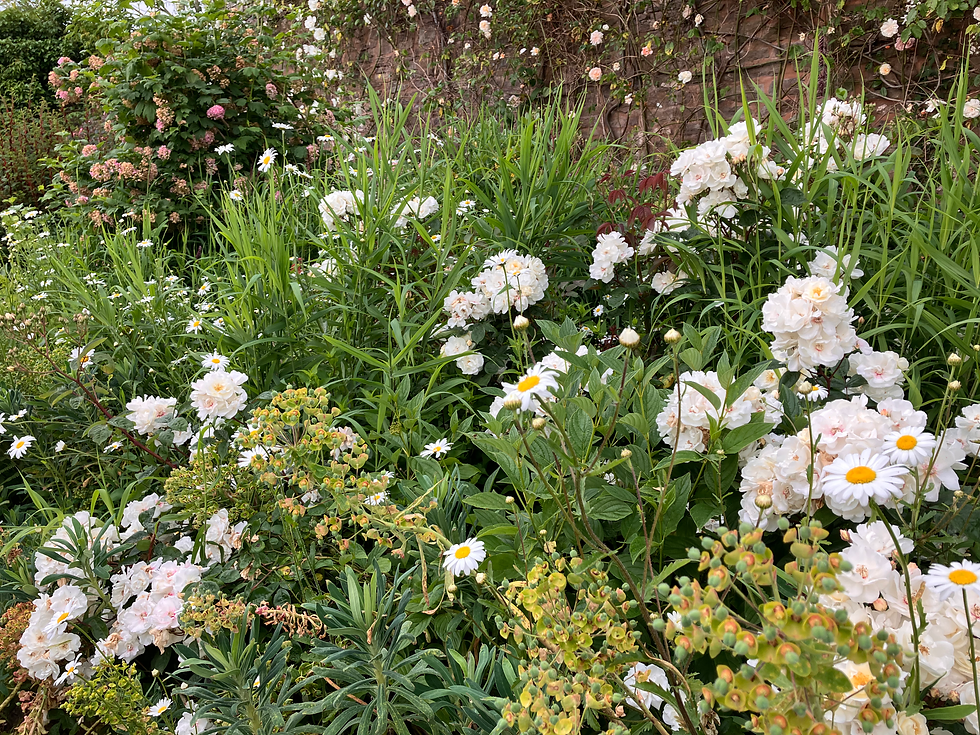
There are many types of perennial plants, many of which flower for long periods in a vast range of colours with a rich mix of textured foliage making them useful in all planting displays.
Then we come to the annuals (and I’ll include biennials here too), they may be short lived and often delicate, but they ‘pack a punch’ and are very useful for growing in between other plants. They will make the most of their space: think of things like annual Poppies or biennial Foxgloves.
All of these plants can be wound into each other, sometimes literally, creating a varied, long-term, and interesting display.

We grow many plants from seed in the greenhouse each year, but we also allow a lot to self seed, which often produces the strongest growing specimens. The gravel paths are particularly useful seed beds. After the seedlings have emerged we ‘reverse edit’ the planting schemes: we do this by removing any seedlings in the wrong place or thin clumps where there are too many (often the case with the foxgloves), but on many occasions we will leave them in the spaces they have chosen to grow.
It gives a variety each year to the permanent planting displays, and makes the whole garden feel bounteous and abundant.



Comments